Key points
- Frequent tripping, warmth, buzzing, burning smells and corrosion are the most urgent signs.
- Many Fort Lauderdale homes built from the 1950s to the 1980s still have 100-amp service or older panels.
- An electrician confirms the need with an inspection and a load calculation, not by age alone.
- Panel upgrades in Broward County generally require a permit and inspection.
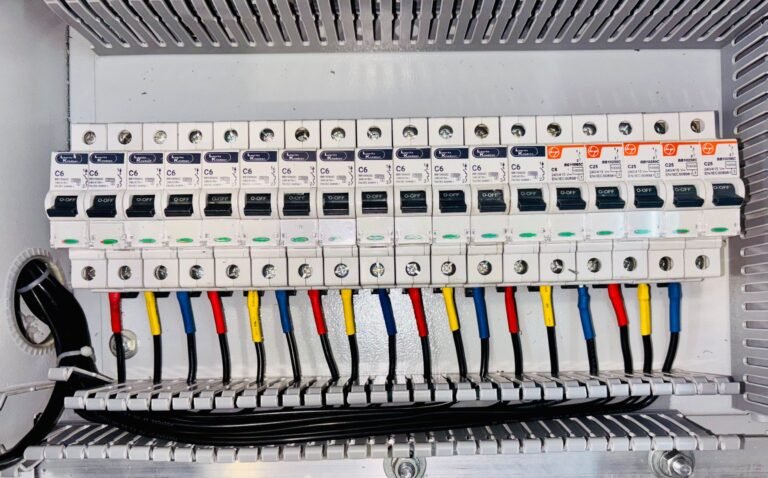
Your electrical panel rarely gets attention until something goes wrong. It sits in a garage, closet or on an exterior wall, quietly distributing power to every circuit in the house. But panels age, homes add load, and South Florida's heat, humidity and salt air are hard on electrical equipment.
This guide explains the signs that a panel may need to be upgraded, what an electrician looks at before recommending one, and what the process typically involves for a Fort Lauderdale home.
What an electrical panel upgrade actually means
"Panel upgrade" gets used for a few different jobs, so it helps to be precise:
- Panel replacement: the old panel is removed and a new one is installed, usually at the same amperage. This is common when the panel is damaged, corroded or a brand that insurers question.
- Service upgrade: the panel and the equipment that brings power into the home — typically the meter base and service conductors — are upgraded to carry more power, such as moving from 100 amps to 200 amps.
- Repair: a single failed breaker, loose connection or corroded bar is fixed on an otherwise healthy panel.
A good electrician will tell you which of these you actually need. Not every warning sign means a full upgrade.
Urgent signs: call promptly
Some symptoms point to overheating or arcing — the conditions that lead to electrical fires. Treat these as urgent:
- A burning or hot-plastic smell near the panel or an outlet.
- A panel cover or breaker that feels warm to the touch, especially when loads are light.
- Buzzing, crackling or sizzling from the panel.
- Scorch marks, melted insulation or discoloration on breakers or wires.
- A breaker that will not reset or trips immediately every time.
If you smell burning or see smoke, keep everyone away from the panel. Call 911 if there is any sign of fire. If you can do so safely, switch off the main breaker, then call an electrician. Do not remove the panel cover yourself.

Capacity signs: your home has outgrown the panel
Many homes in neighborhoods like Coral Ridge, Imperial Point, Lauderdale Manors and much of Oakland Park and Wilton Manors were built when a household's biggest electrical loads were a range and maybe a window air conditioner. Today the same house may run central air, an electric water heater, a pool pump, a home office and an electric vehicle charger.
Signs the panel is undersized for how you live now:
- Breakers trip when two big appliances run at once — for example the microwave and toaster oven, or the AC and the dryer.
- Lights dim or flicker when the air conditioner or another large motor starts.
- There are no open spaces for new circuits, or the panel is crowded with tandem ("cheater") breakers.
- You are planning a big addition — an EV charger, pool, spa, kitchen remodel or room addition.
A crowded panel is not automatically dangerous, but it limits what you can add and often hides past shortcuts. Our guide to 100-amp vs. 200-amp panels explains how electricians decide how much capacity a home needs.
Age and equipment signs
Age alone does not condemn a panel, but older equipment deserves a closer look:
- Fuse boxes are still found in some older Broward homes. They can be overloaded easily by installing a larger fuse, and many insurers will not write policies on them. See fuse box replacement.
- Certain older panel brands, such as Federal Pacific Stab-Lok and Zinsco, are frequently questioned by insurers and home inspectors.
- Breakers that are no longer manufactured make repairs harder and can lead to mismatched, non-listed replacements.
- A 4-point inspection for insurance or a buyer's home inspection that flagged the panel.
Corrosion: a South Florida problem
Salt air, humidity, sprinkler overspray and the occasional roof or wall leak all find their way into electrical equipment. Exterior panels and meter cans near the beach — along the Galt Mile, in Lauderdale-by-the-Sea or east of the Intracoastal — are particularly exposed.
Corrosion on breakers and bus bars increases resistance, which creates heat. Light surface rust on the enclosure is cosmetic; corrosion inside the panel, on the bars or at the connections is not.
What an electrician checks before recommending an upgrade
A professional assessment should look at more than the panel label. Expect an electrician to:
- Identify the panel brand, model, age and amperage, and check the main breaker and service conductors.
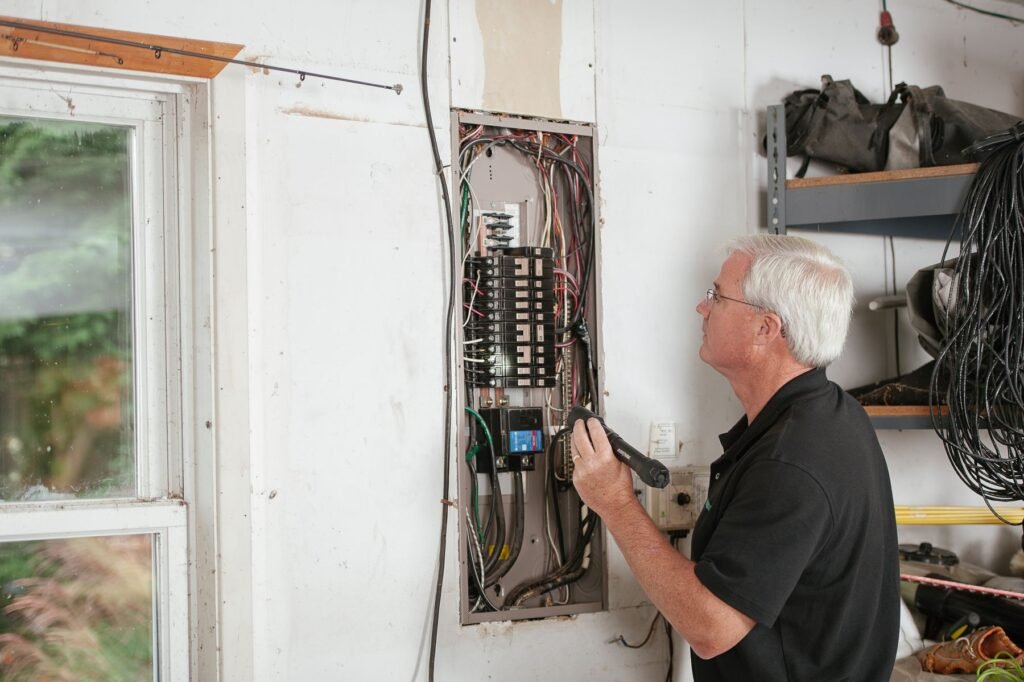
- Open the panel (safely) and inspect for heat damage, corrosion, double-tapped breakers, mismatched breaker brands and wires that are too small for their breakers.
- Check grounding and bonding, which are often incomplete in older homes.
- Ask about your plans — EV, pool, generator, renovations — and run a load calculation.
- Explain options in plain language: repair, same-size replacement, or a service upgrade.
If you want an independent look before deciding, an electrical panel inspection is a reasonable first step.
Send photos of the panel and its label through our booking form and we will tell you what we see. Estimates are free.
What the upgrade process looks like
For a typical Fort Lauderdale home, a panel upgrade follows a predictable sequence:
| Step | What happens |
|---|---|
| Assessment | Inspection of the panel and service, plus a load calculation |
| Estimate | Written scope: equipment, permit, utility coordination and schedule |
| Permit | Electrical permit obtained through your city's building department where required |
| Utility coordination | For service upgrades, FPL disconnects and reconnects power at the meter |
| Installation | Old panel removed, new panel installed, circuits reconnected and labeled |
| Inspection | The city inspector verifies the work before the job is closed |
The installation itself is often completed in a day. The overall timeline depends more on permitting and utility scheduling than on the work inside your home. Power will be off for part of installation day, so plan for refrigerators, medical devices and work-from-home needs.
What affects the cost
We do not publish one-size-fits-all prices because panel work varies so widely. The biggest factors are:
- Whether it is a same-size replacement or a service upgrade.
- Whether the meter base, mast or service conductors also need replacing.
- Panel location and whether it must be relocated.
- The number of circuits to reconnect and label.
- Code corrections discovered along the way, such as grounding, AFCI/GFCI protection or surge protection.
- Permit and inspection fees for your city.
A written estimate after an assessment is the only reliable number. Learn more on our electrical panel upgrade page.
Don't wait for a failure
The best time to upgrade a panel is before it fails — when you can schedule the work, choose the timing and avoid an emergency call. If you have noticed any of the signs above, a short assessment will tell you whether you need a repair, a replacement or more capacity.
Frequently Asked Questions
How long do electrical panels last?
Many panels last several decades, but lifespan depends on the equipment, how heavily it is loaded, and its environment. Panels exposed to moisture or salt air can deteriorate faster. Condition matters more than age.
Is a warm electrical panel normal?
A panel can feel slightly warm under heavy load, but it should not feel hot. Heat, especially with a smell or buzzing, usually points to a loose connection or overloaded breaker and should be checked promptly.
Can I upgrade my panel without upgrading my service?
Yes. If your current service size is adequate, a same-size panel replacement may solve the problem. A load calculation tells you whether more capacity is needed.
Does a panel upgrade require a permit in Fort Lauderdale?
Panel replacements and service upgrades generally require an electrical permit and inspection. Your electrician should explain the specific requirements for your city.
Will a new panel fix flickering lights?
Only if the panel is the cause. Flickering can also come from loose connections, failing fixtures or utility-side problems, so an electrician should diagnose it first.
Do I need to be home during the upgrade?
Usually yes, at least at the start and end, and someone must provide access for the inspector. Power will be off for part of the day.
More answers: browse the electrical FAQ center.
Photos and video on this page are licensed stock media used for illustration, not photos of Empire projects. This article is general information; your electrician should evaluate your specific property.