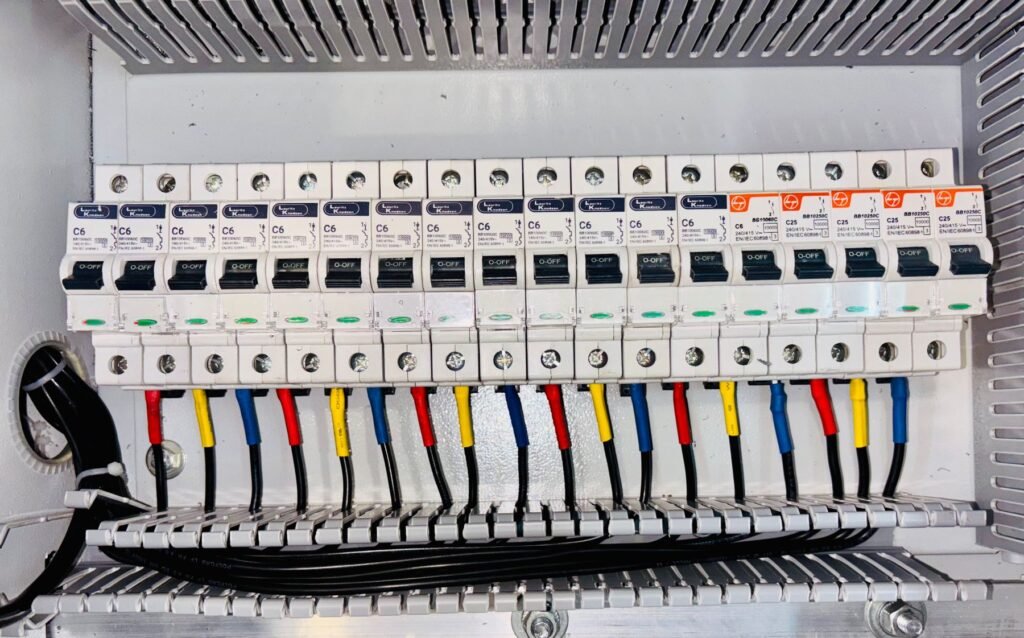
Key points
- Amperage describes how much current your service can safely deliver at once.
- A 200-amp service roughly doubles the capacity of a 100-amp service.
- Central AC, electric heat strips, water heaters, ranges, dryers, pools and EV chargers drive most of the demand.
- A load calculation — not guesswork — decides whether you need an upgrade.
If you are planning an EV charger, a pool, a kitchen remodel or a new air conditioner, you will probably hear the question: "Is your service 100 amps or 200 amps?" The answer shapes what you can add to your home and whether a service upgrade belongs in your budget.
This guide explains what those numbers mean in practical terms, which South Florida loads matter most, and how electricians decide what a home really needs.
What "amps" means for your home
Your service size — 100, 150, 200 amps and so on — is the maximum current your home's electrical service is designed to carry at one time. It is set by the main breaker and the size of the service equipment: the conductors from the utility, the meter base and the panel.
Most homes have 120/240-volt service. In rough terms:
| Service size | Approximate maximum capacity |
|---|---|
| 100 amps | About 24,000 watts at 240 volts |
| 200 amps | About 48,000 watts at 240 volts |
That does not mean a 100-amp home can run exactly 24,000 watts of appliances all day. Electrical codes require headroom, and some loads — like EV charging — are treated as continuous and must be calculated at a higher value. The table simply shows that a 200-amp service has roughly twice the capacity.
Why many Fort Lauderdale homes have 100 amps
Homes built in the 1950s, 1960s and 1970s — a large share of the housing in Fort Lauderdale, Oakland Park, Wilton Manors and parts of Pompano Beach — were often built with 60- to 100-amp services. Many have had their panels replaced since, but not always their service size.
Those homes may have been fine when they were built. The problem is everything that has been added since.
The South Florida loads that add up

Every home is different, but these are the loads electricians look at first in Broward County:
- Central air conditioning. It runs most of the year here. Larger homes often have two systems.
- Electric heat strips in the air handler. Many Florida air handlers include electric resistance heat. It rarely runs, but when it does, it can be one of the largest loads in the house — and a load calculation has to account for it.
- Electric water heaters, ranges and dryers. Each typically needs a dedicated 240-volt circuit.
- Pool and spa equipment. Pumps, heaters, heat pumps and lighting.
- EV chargers. A Level 2 charger is a long, continuous load. See our EV charger installation guide.
- Home offices, workshops and additions. More circuits, more simultaneous use.
A home with gas cooking and a gas water heater uses far less electrical capacity than an all-electric home of the same size, which is why square footage alone does not answer the question.
How electricians decide: the load calculation
Rather than guess, electricians use a load calculation based on methods in the National Electrical Code, as adopted in Florida. It accounts for:
- The home's square footage (for general lighting and receptacles).
- Required kitchen and laundry circuits.
- Every fixed appliance and its nameplate rating.
- Heating and cooling loads — counting the larger of the two.
- Planned additions such as an EV charger or pool.
The result is an estimated demand in amps. If it fits comfortably within your current service, you may not need an upgrade at all. If it is close to or above your service rating, an upgrade — or a load-management solution — is the safer choice.
A load calculation is also how an electrician can tell you *how much* room you have left, which is useful before buying an EV, adding a pool or finishing a garage.
When 100 amps can still work
A 100-amp service can be adequate for a smaller home with gas appliances and modest additions. Options that sometimes avoid a service upgrade include:
- Load management devices that pause an EV charger when other large loads run.
- Choosing appliances wisely, such as a heat pump water heater instead of a standard electric tank.
- Rebalancing circuits and replacing a crowded panel with a larger panel of the same service size.
These options depend on the specific home and must meet code. They are worth discussing before you commit to an upgrade.
When 200 amps makes sense
A 200-amp service upgrade is usually the right move when:
- The load calculation shows you are at or above your current capacity.
- You are adding a large load — an EV charger, pool, spa or addition — on top of central AC and electric appliances.
- Breakers trip under normal use or lights dim noticeably when the AC starts.
- You want room for a generator transfer switch or future additions.
- The existing service equipment is old, corroded or damaged anyway.
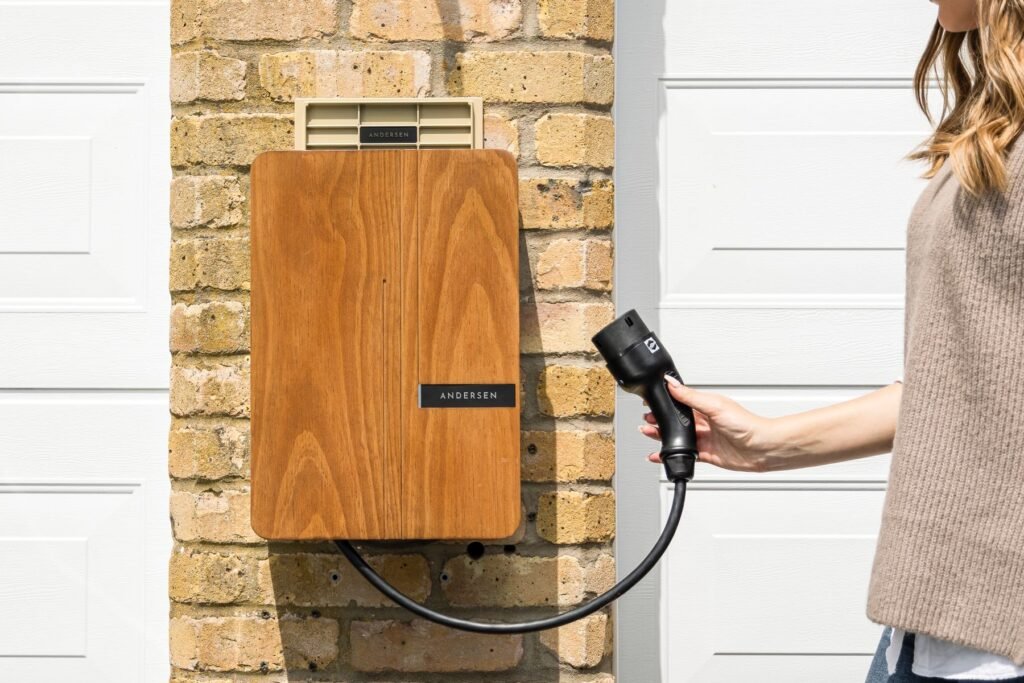
What a 100-to-200-amp upgrade involves
A service upgrade is more than swapping the panel. It typically includes:
- A new 200-amp panel and breakers.
- A new meter base rated for 200 amps, if the existing one is not.
- New service conductors from the meter to the panel, and sometimes a new service mast for overhead service.
- Grounding brought up to current requirements.
- Surge protection where code requires it.
- Coordination with FPL to disconnect and reconnect power.
- An electrical permit and inspection through your city.
The on-site work is often completed in a day, but permits and utility scheduling set the overall timeline. Our 100 to 200 amp service upgrade page explains the steps in more detail.
Book a load check. Send a photo of your panel label and main breaker, and tell us what you plan to add.
Is bigger always better?
Not necessarily. Very large homes or homes with multiple AC systems, pools and two EVs may need more than 200 amps. Smaller homes may be well served by 150 amps. The goal is the right size for your actual and planned load — not the biggest number available.
If you are unsure where your home stands, start with the facts: the panel label, the main breaker size and a list of what you plan to add. An electrician can take it from there.
Frequently Asked Questions
How do I know if my house has 100 or 200 amp service?
Check the main breaker at the top of your panel — it is usually labeled with its amperage. The panel label and the meter base can also help, but an electrician should confirm, because the panel rating and service size are not always the same.
Is 200 amps enough for a house?
For most single-family homes in Broward County, yes. Very large all-electric homes with multiple AC systems, a pool and EV charging may need more. A load calculation answers it.
Can I add an EV charger on 100 amps?
Sometimes. It depends on your existing loads. Load-management devices can make it possible in some homes. A load calculation is the first step.
Does a 200-amp upgrade use more electricity?
No. Service size is capacity, not consumption. You only use the electricity your appliances draw.
Do I need a new meter for a 200-amp upgrade?
The meter itself belongs to the utility, but the meter base often needs to be replaced with one rated for 200 amps.
How long does a 100 to 200 amp upgrade take?
The installation is often completed in about a day. Permitting and FPL scheduling usually take longer than the work itself.
More answers: browse the electrical FAQ center.
Photos and video on this page are licensed stock media used for illustration, not photos of Empire projects. This article is general information; your electrician should evaluate your specific property.